
There’s a quiet revolution happening in digital intimacy—and it’s not on your feed.
It’s happening in private browser tabs, late at night, in incognito mode. It’s the moment someone uploads a photo—not to share, but to see. To imagine. To explore a version of reality that exists only in simulation, yet feels strangely personal.
This isn’t about deception. It’s not about violating boundaries. For most users, it’s about agency, curiosity, and creative control—over their own image, their fantasies, or the content they produce.
And the tools enabling this? They’ve evolved far beyond the crude, controversial prototypes of 2019. Today’s best services are fast, private, and surprisingly nuanced. They don’t ask for your email. They don’t store your data. They work on your phone. And they deliver results in under 30 seconds.
In creator circles and private forums, people aren’t talking about “AI undressing” as a scandal anymore. They’re asking practical questions: “Does it work on side angles?” “Can it handle darker skin tones?” “Is there a reliable way to do this without getting scammed?”
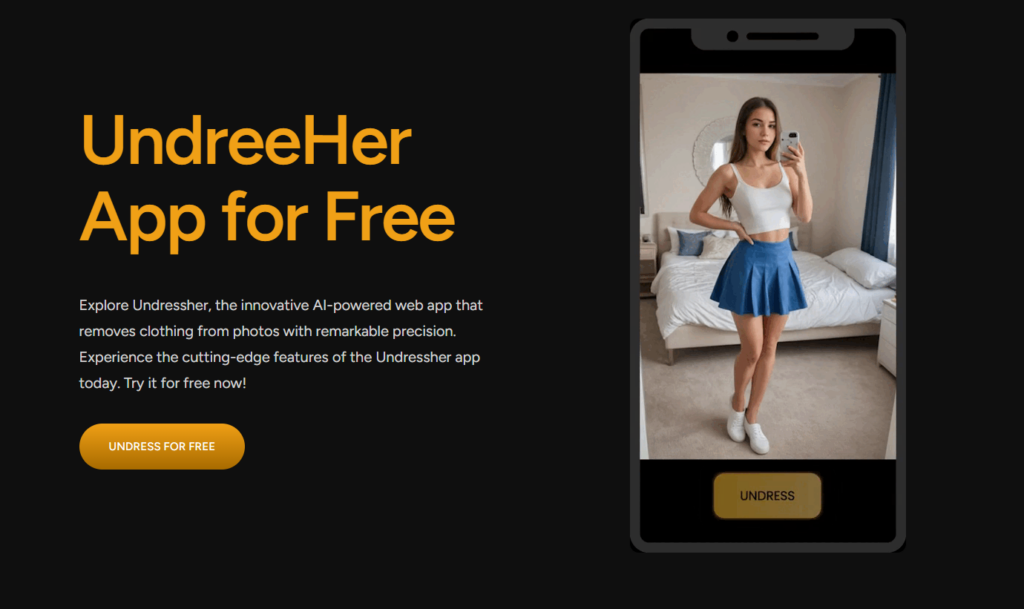
One phrase keeps coming up—not as a brand, but as a verb: undressher. As in, “I found a way to undress her from that beach photo.” It’s become shorthand for a very specific act: using AI to generate a plausible, simulated nude from a clothed image—quickly, privately, and without technical hassle.
But who’s really doing this—and why does it keep growing, despite the stigma?
Beyond the Moral Panic
Let’s be honest: the early days of this technology were messy. The models were biased, the intent was often predatory, and safeguards were nonexistent. Critics were right to sound the alarm.
But here’s what rarely gets covered: the user base matured.
Instead of vanishing, these tools were rebuilt—by developers who actually listened to real users. Creators asked for better body diversity. Privacy advocates demanded auto-deletion. Ethicists pushed for consent prompts. And slowly, the ecosystem adapted.
Today’s top-tier services:
- Support all skin tones and body types,
- Automatically blur or reject photos of minors,
- Delete uploads within minutes,
- And avoid storing any user data—even IP addresses, in some cases.
This isn’t perfection. But it’s progress. And it reflects a simple truth: demand exists, so the question isn’t whether these tools should exist—it’s how they can exist responsibly.
Real Use Cases in 2026
Forget the worst-case scenarios. Here’s what’s actually happening:
1. Independent creators optimizing their workflow
Many models use AI to generate teaser images from clothed promo shots. Why? Because platforms like Instagram ban explicit content—but allow suggestive previews. An AI-generated nude from a bikini photo can drive traffic to a paid page without risking a shadowban. It’s not deception; it’s smart marketing.
2. Newcomers testing creative boundaries
People exploring adult content creation often hesitate to shoot fully nude right away. With AI, they can experiment with poses, lighting, and aesthetics using clothed reference photos—building confidence before committing to real shoots.
3. Consensual digital play between partners
Some couples use these tools privately—uploading photos of each other (with clear, mutual consent) to explore fantasy scenarios. Think of it like sending a custom “what if” image as part of flirtation. As long as both parties are enthusiastic, it falls into the same ethical space as erotic audio or written fiction.
4. Retro enthusiasts reimagining vintage visuals
Classic pin-up photography—from the 40s to the 90s—often features artistic draping, sheer fabrics, or partial coverage. Some collectors use AI to reinterpret these images in a more explicit form, not to deceive, but to explore alternate presentations of historical aesthetics. Since many are in the public domain, the legal risk is minimal.
5. Privacy researchers stress-testing systems
Surprisingly, some of the most active users are digital rights advocates. They use these tools to demonstrate how easily biometric data can be inferred from everyday photos—then develop countermeasures like adversarial noise filters to protect against unwanted reconstruction.
The pattern? Agency, consent, and context matter far more than the tool itself.
How to Spot a Legit Service (And Avoid Scams)
The market is flooded with fakes—sites designed to harvest clicks, install malware, or upsell fake subscriptions. So how do you tell the real ones from the traps?
✅ No sign-up required – If you can’t upload and generate in under 60 seconds, it’s probably a funnel.
✅ Clear data policy – Look for: “All images deleted from servers within 5 minutes.”
✅ Mobile-friendly design – Most users are on phones. If the interface breaks on iOS, it’s not built for real life.
✅ No fake urgency – “Only 2 credits left!” is a scam tactic. Real tools don’t pressure you.
✅ Transparent output limits – Free tiers often cap resolution at 512×512. That’s normal. HD usually costs a few bucks—but it should be optional.
Avoid anything that:
- Asks for camera/mic access,
- Uses aggressive pop-ups,
- Has a URL with typos or odd domains (.xyz, .top, etc.), unless verified by trusted communities.
A quick check on NSFW subreddits or creator Discord servers often reveals which platforms are currently reliable.
The Tech Has Grown Up
Early versions relied on GANs—prone to distorted limbs and racial bias. Today’s best tools use diffusion models, fine-tuned on diverse datasets that include professional adult photography, cinematic lighting, and varied body aesthetics.
This means they understand:
- How fabric drapes over curves,
- How light creates shadows on different skin tones,
- How posture affects body shape (e.g., arms crossed vs. hands on hips).
Some even let you adjust parameters: body type, skin tone, lighting intensity—before generating the final image. It’s not photorealistic, but it’s plausible enough for fantasy, which is often the goal.
And because these models run on cloud GPUs, you don’t need a powerful PC. Your browser is enough.
The Non-Negotiable: Consent
This can’t be overstated: never use someone’s photo without their knowledge and permission.
Even if the image is public (e.g., a social media post), that doesn’t grant you the right to generate intimate reinterpretations. The ethical line is clear: consent is non-negotiable.
Thankfully, many newer platforms bake this in:
- Some auto-blur faces unless you confirm “I own this image,”
- Others block uploads containing watermarks or known celebrity features,
- A few integrate reverse image search to flag potentially non-consensual use.
These aren’t perfect shields—but they show the space is maturing.
Legal Realities: Know Where You Stand
Laws are catching up—slowly.
- In the U.S., 14 states now criminalize the non-consensual distribution of AI-generated intimate imagery.
- The EU treats inferred biometric data as sensitive under GDPR.
- In Canada, Australia, and the UK, similar laws are in draft stages.
But enforcement remains difficult when services are hosted offshore. So again: user responsibility is key.
Safety Checklist for First-Timers
If you’re curious, protect yourself:
- Only use images you own or have explicit rights to—yourself, public domain, or AI-generated faces.
- Use incognito mode—prevents accidental history saves.
- Don’t pay with traceable methods—use a burner email and prepaid card if needed.
- Never share outputs publicly—even if it’s your own photo.
- Assume nothing is truly deleted—operate as if your upload could resurface.
Privacy isn’t a guarantee. It’s a practice.
The Bigger Picture
This isn’t really about “removing clothes.” It’s about control over representation.
In a world where our images are constantly scraped, shared, and repurposed, tools that let us reclaim or reimagine our likeness—even in simulation—carry deep psychological weight. For some, it’s empowerment. For others, it’s play. For creators, it’s efficiency.
The technology itself is neutral. Like a camera, a paintbrush, or a vibrator, its impact depends entirely on intent and ethics.
And as long as users prioritize consent, privacy, and personal boundaries, these tools won’t be a threat—they’ll be just another brush in the ever-expanding palette of digital intimacy.